Building or renovating? How to make interior selections without the overwhelm
You start with flooring, then tiles, then tapware, stone and cabinetry. Every showroom has someone who knows their product inside out and can explain why one tile performs better. None of that advice is wrong, but you aren't choosing a tile, you're designing one home.
Why building or renovating comes with so many decisions
A home isn't one big design decision. It's hundreds of small ones, and each one touches the next.
Every category gives you another set of choices
Flooring, tiles, stone, cabinetry, paint, lighting, tapware, hardware and sanitaryware all arrive with their own ranges and price points. Before you've finished one category, your builder is already asking about the next.
More choice doesn't necessarily make choosing easier
Most people call this decision fatigue. I call it having too many reasonable options and no way to rank them. Eventually you pick whatever you saw last, and that isn't a design strategy.
A good product isn't automatically the right product for your home
You can choose beautiful tile, stone, tapware and flooring and still end up with an interior that doesn't feel right. Good products don't add up to a beautiful and cohesive home on their own.
Showrooms help you choose within one category
Showroom staff are often incredibly knowledgeable about what they sell. Their job is to help you make the best decision within their product category, which is a different job to making sure it suits the rest of the house.
Your home needs someone looking at the whole picture
Someone has to consider undertones, scale, texture and maintenance across every room at once. A cream that looks warm in the tile showroom can look yellow beside your benchtop, and nobody in either showroom will see that.
Start with the whole home before choosing individual products
Good interior design works from the outside in, with direction first and products second.
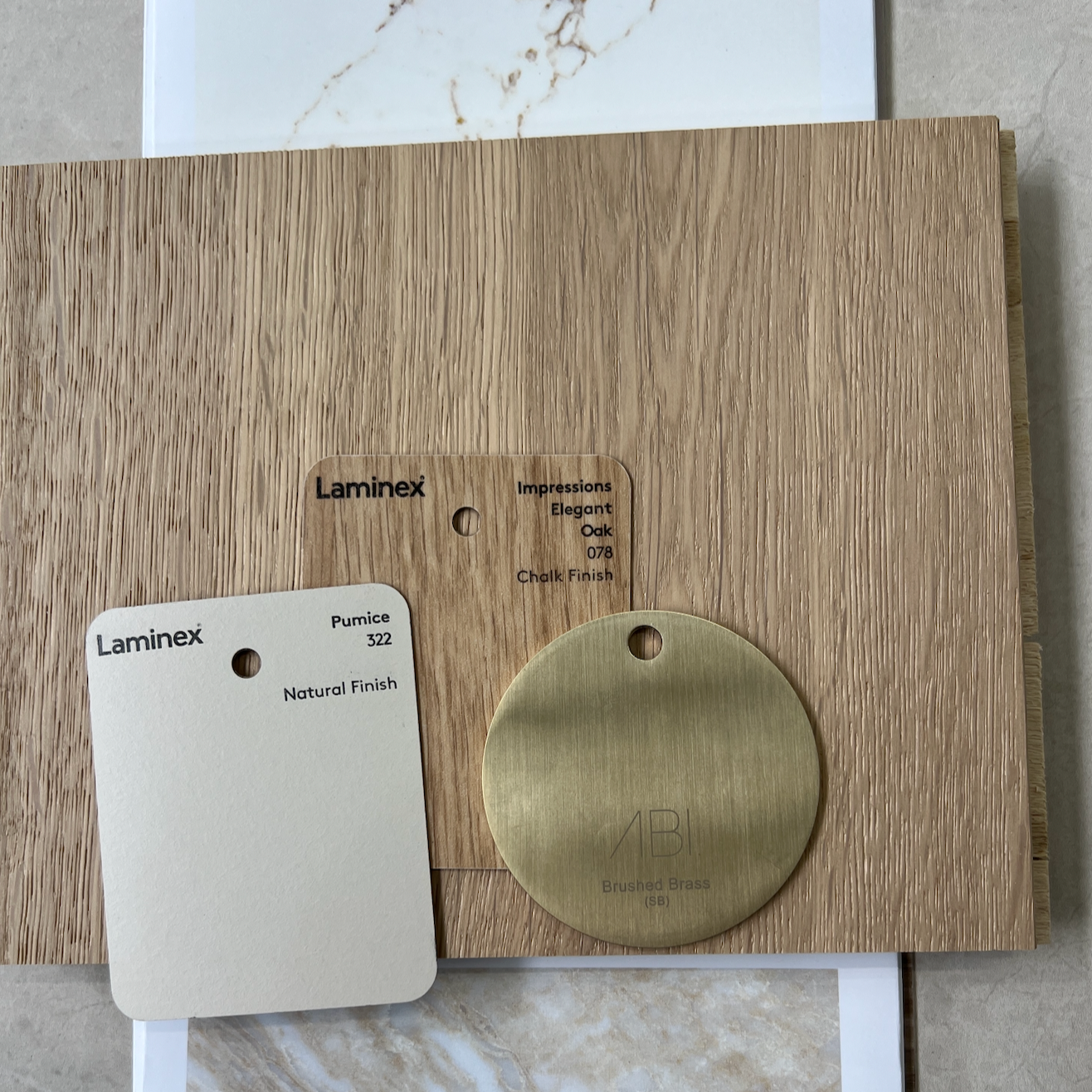
Building or renovating? How to make interior selections without the overwhelm.
Establish your overall design direction
Decide on your palette, mood and level of contrast, then choose your timber tone and metal finishes. Everything you select later gets measured against that.
Consider how your family will actually use the home
Think about kids, pets, cleaning and storage. A finish that photographs beautifully but marks within a month is a poor choice for a busy household.
Give every decision a reason
Stop asking, "Do I like this tile?" Ask instead, "Does this tile belong in the scheme we're creating?" You'll be surprised how many lovely options rule themselves out.
What interior selections should be made before construction?
Timing depends on your project and your builder. Generally, you'll need flooring, tiles, cabinetry finishes, benchtops and splashbacks, followed by tapware, basins, baths, toilets and sinks. Then come paint, door hardware and lighting. All of it is easier to coordinate when the overall direction is resolved early.
Why making selections one at a time can cause problems
This isn't about budget blowouts, it's about connection. Direction changes halfway through, undertones drift from room to room and too many materials start competing.
Each choice made sense in its own showroom. Then the builder asks the next question and you have no reference point. Every selection should be answering the same design brief.
What is an interior specification pack?
A specification tells you and your builder what has actually been selected. It isn't inspiration, it's the decision, documented.
What should a specification include?
It lists the product, finish and colour, along with the supplier, the product reference and where each item will be used. A mood board shows a feeling, whereas a specification shows exactly what goes where.
A simpler way to make your interior selections
You don't need more options. You need fewer, better-connected decisions, which is exactly why I created The Edit. It's a done-for-you fixtures and finishes specification pack. You choose your preferred overall style, and every selection has already been considered as part of the whole. You then hand the finished specification straight to your builder.
You don't need more choices. You need a clear direction.
The goal isn't to get through a selections appointment. It's to finish with a home that feels connected, suits your family and still feels right years after the build. Explore The Edit and choose a complete interior direction for your renovation or new build.
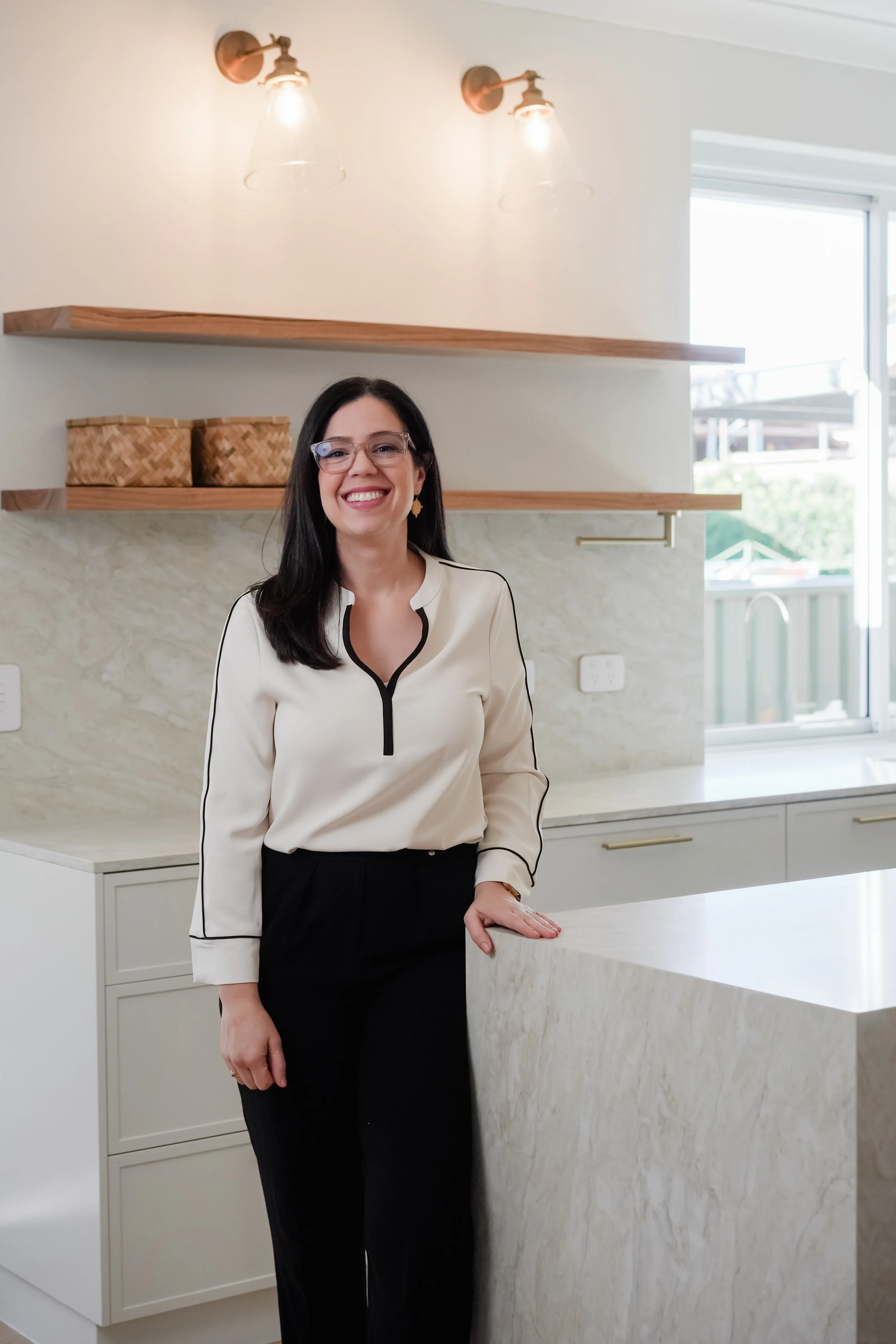
With over 10 years of experience in residential and retail design, Isabella Ghaly brings professional design thinking to every detail of The Edit.
A UTS Interior and Spatial Design graduate with expertise in kitchen renovations to multi-duplex developments she understands how to turn inspiration into practical, well considered specifications.
The Edit distils that experience into clear, usable selections you can confidently source and apply to your own project.