“Just make it your style" is the worst renovation advice.
"Make it reflect your personal style" is some of the worst renovation advice you'll hear.
Not because your style doesn't matter, because it does. But "choose what you love" gives you no way of making 300 decisions that all have to work together.
A cohesive interior isn't created by making 300 good individual choices. It comes from making those choices in relation to one another.
Why choosing renovation finishes gets so difficult
Tiles get chosen in one showroom and tapware gets ordered online three weeks later. Cabinetry is decided at a separate appointment, and paint gets finalised at the end, usually in a rush.
By then you're remembering undertones from a sample seen months ago. You're not assessing anything together, you're relying on memory, and memory is terrible with colour.
The problem isn't your taste
Most people can pick individual things they like, so that's not the hard part.
The harder skill is understanding how one selection changes another. A warm oak floor can make a crisp white paint look cold and grey. A stone with a pink vein can make some cabinetry colours look muddy, while your tapware finish shapes your hardware, lighting and accessories.
Cohesion is a workflow problem, not a taste problem
A cohesive home comes from the relationships between things like colour, undertone, texture, material, finish, scale, proportion and repetition.
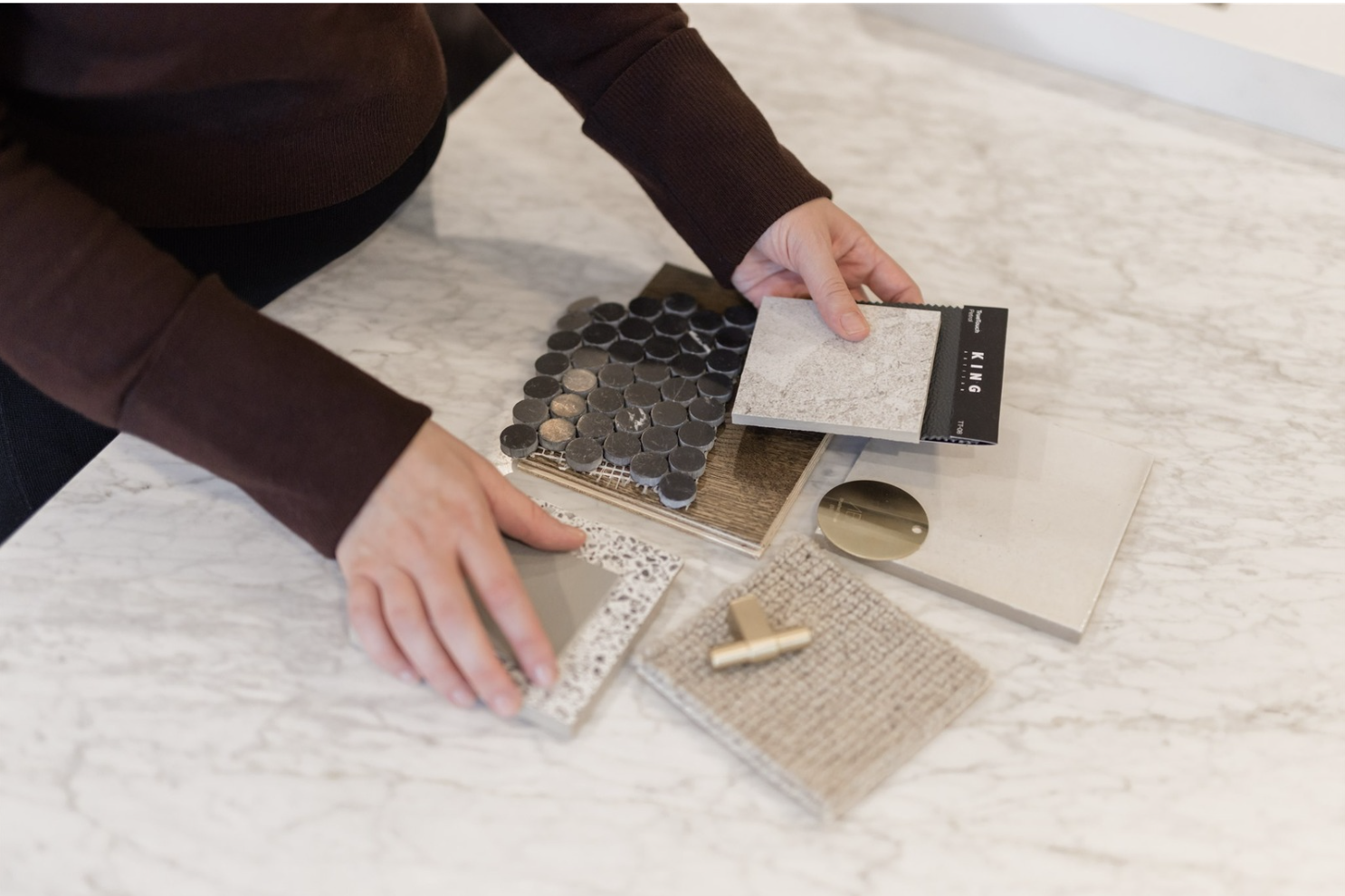
None of that means everything should match, because matching is what makes a home feel flat. Cohesion comes from repeating a few elements in different ways. That might be the same warm undertone in your stone and floor, or a brushed metal in both the kitchen and ensuite.
You can't get those connections by picking products one at a time. You get them by choosing in the right sequence.
How to choose renovation finishes in the right order
Start with the hardest elements to change
Flooring, cabinetry, benchtops and your main tiles come first. They cover the most surface area, cost the most to fix and set the visual language for the whole home.
Build the supporting material palette
Once those are locked in, choose tapware, hardware, secondary tiles and splashbacks against them. Hold every new sample next to your big surfaces, and if it fights with them, it's out.
Leave flexible decisions until later
Paint is the easiest thing to change in a house, so choose it last, against your real materials and in your real light. The same goes for decorative pendants and accessories.
Stop choosing each room as a separate project
Too often, each room gets treated as its own project with its own mood board.
Your kitchen and bathroom don't need the same tile, but they should look like they belong in the same house. Their colours, metals and materials need to have a conversation across the hallway.
“Just make it your style" is the worst renovation advice.
Why beautiful individual choices can still look wrong together
Showrooms are designed to make products look good, with bright lighting, neutral walls and nothing competing beside them.
At home, that same tile sits next to your floor, joinery, stone, wall colour and tapware. It's also lit by your windows, not by showroom spotlights.
So stop asking "Do I like this?" and start asking "What does this do to everything beside it?" That question will save you from expensive changes later.
Create one interior direction before you start shopping
Instead of collecting unrelated inspiration images, set a few clear rules before you visit a showroom. For example:
warm rather than cool
quiet rather than high-contrast
natural rather than highly polished
two or three recurring material families
one clear metal direction
one consistent approach to whites and neutrals
These rules give you enough structure to decide quickly without making every room identical. They'll also stop you falling for a tile that doesn't belong in your house.
Where THE EDIT fits into the renovation process
You can build this system yourself. The hard part is doing it while managing your builder, your budget and every other renovation decision.
That's why I created THE EDIT. It brings every interior selection together, already chosen and coordinated for your renovation or new build. Everything is from Australian suppliers, available online.
The value isn't just that I've picked nice products. It's that every selection has been considered in relation to the others, so the undertones, metals and materials are already worked out for you.